How to Start Speaking Arabic Without Knowing the Arabic Script: A Practical Guide for starters
Learning a new language is an adventure, but Arabic often feels like an intimidating mountain to climb. The primary culprit? The script. Between the flowing calligraphy, the right-to-left direction, and the lack of short vowels, many prospective learners give up before they even say “Marhaba.”
But here is the good news: You do not need to master the Arabic alphabet to start speaking the language. In fact, many of the world’s most successful polyglots recommend starting with the spoken language first.
If your goal is to converse, travel, or connect with Arabic speakers, here is your roadmap to speaking Arabic without touching the script.
1. Embrace Transliteration (Your Secret Weapon)
Transliteration is the process of writing Arabic words using the Latin (English) alphabet. While it isn’t a perfect substitute for the script, it is the most effective tool for beginners.
How to use it:
Look for beginner courses that provide “Romanized” Arabic.
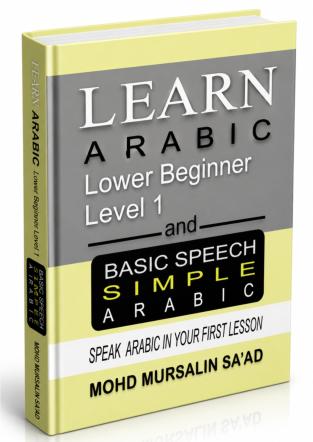
or step-by-step Arabic approach
When you learn common phrases, write them out in a way that makes sense to you phonetically. Something that you can speak daily. don’t just memorized words.
The Pro Tip:
Don’t just rely on standard textbook transliterations. Customize your own! If a word sounds like “Shuk-ran,” write it exactly like that in your notebook so your brain recognizes the sound immediately. keep a small notebook in your pocket. revise any time
2. Focus on “Spoken” Dialects (Ammiya)
Arabic is a “diglossic” language. This means the written language (Modern Standard Arabic or Fusha) is rarely spoken in everyday life.
The fusha is written on books and newspaper.
If you want to speak quickly, skip the formal grammar books for now and pick a dialect.
Choose one of the major “Ammiya” (colloquial) dialects:
Levantine: Used in Lebanon, Syria, Jordan, and Palestine. Very popular for beginners. Egyptian: The most widely understood dialect in the Arab world due to cinema and media. Gulf (Khaliji): Useful if you are moving to the UAE, Qatar, or Saudi Arabia for business.
By choosing a dialect, you bypass the complex formal grammar and go straight to the phrases you’ll actually use at a coffee shop or a dinner party.
3. Leverage Audio-First Learning Platforms
Since you are bypassing the script, your ears must become your primary school. Focus on resources that prioritize listening and repetition:
Record your own Audios:
What are you going to speak?
Record in on audio or your mobile phone
This approach focuses on building sentences logically rather than rote memorization. It’s excellent for people who are nervous about speaking.
4. The “Mirror Method” for Pronunciation
Arabic contains sounds that do not exist in English (such as the deep ‘ayn or the emphatic dhad). Because you aren’t reading, you have no “visual crutch” to fall back on—which is actually an advantage.
Practice in front of a mirror:
Watch your mouth shape and tongue placement. Record yourself: Compare your audio to a native speaker’s audio. When you don’t have the script to distract you, you become much more attuned to the nuances of rhythm and intonation.
5. Build a “Functional Vocabulary” List
You don’t need to know the alphabet to learn the 100 most common words.
Create a digital flashcard deck
with the English on one side and the phonetic Arabic on the other.
Your starter list should include:
Greetings Polite phrases (Please, Thank you, Excuse me) Ordering food/drink Asking for directions Basic affirmations (Yes, No, Maybe) The “But Wait…” Moment: Will you regret skipping the script?
Eventually, you might reach a plateau. Once you can hold a basic conversation, you will realize that not knowing the script limits your ability to read signs, menus, or news.
The approach: Think of the script not as a prerequisite, but as an advanced module. Once you are already comfortable speaking and your “Arabic ears” are tuned, learning the alphabet will take you a fraction of the time it would have taken at the beginning.
Final Thoughts: Just Start Talking
Arabic is a language of connection, poetry, and hospitality. Don’t let a set of symbols keep you from the beauty of the language. Start with your ears, use phonetic markers, pick a dialect, and start speaking today.
“Al-rahla al-taweela tabda’ bi-khatwa wahida” (The long journey begins with a single step).
Ready to start? Pick one dialect today and look up your first ten phrases. Your journey starts now!
Some phrases to start Arabic without knowing the Arabic script
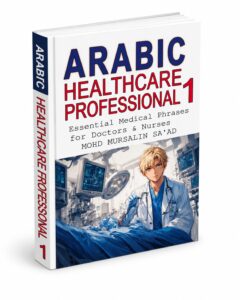
If you work in a hospital as a nurse or doctor. These essential will benefit you. you need t think like an Arabic speaker and speak directly to the patient, at times you need to act urgently to save life, or knowing the basic will definitely help you.
If you are a customer service
Can I help you? أيمكنني مساعدتك؟ ‘ayumkinuni musaeadatuka?
I need help انا بحاجة الى مساعدة ana bihajat alaa musaeida
Can I see the doctor هل يمكنني زيارة الطبيب؟ hal yumkinuni ziarat altabib?
Yes, نعم، naem,
Observe the patient, if he/she needs urgent help. Is the patient holding his chest, or is he in pain. take the correct action.
Wait (when the patient is male) انتظر antazir
What’s your name Sir? ما اسمك يا سيدي؟ ma asmuk ya saydi?
Wait (when the patient is female) انتظري antaziri
What’s your name Madame? ما اسمكِ يا سيدتي؟ ma asmk ya sidti?



Comments are closed, but trackbacks and pingbacks are open.